A Brackish & Co field guide
Bacteria are talking.
We wrote down what they say.
Microbes signal, cooperate, freeload, compete for territory and move between people who live together. A lot of that looks uncomfortably like us. This is a public, plain-language map of what the research actually supports — and an honest list of what it doesn't.
- papers cited
- —
- claims on the record
- —
- open gaps named
- —
papers cited
claims on the record
open gaps named
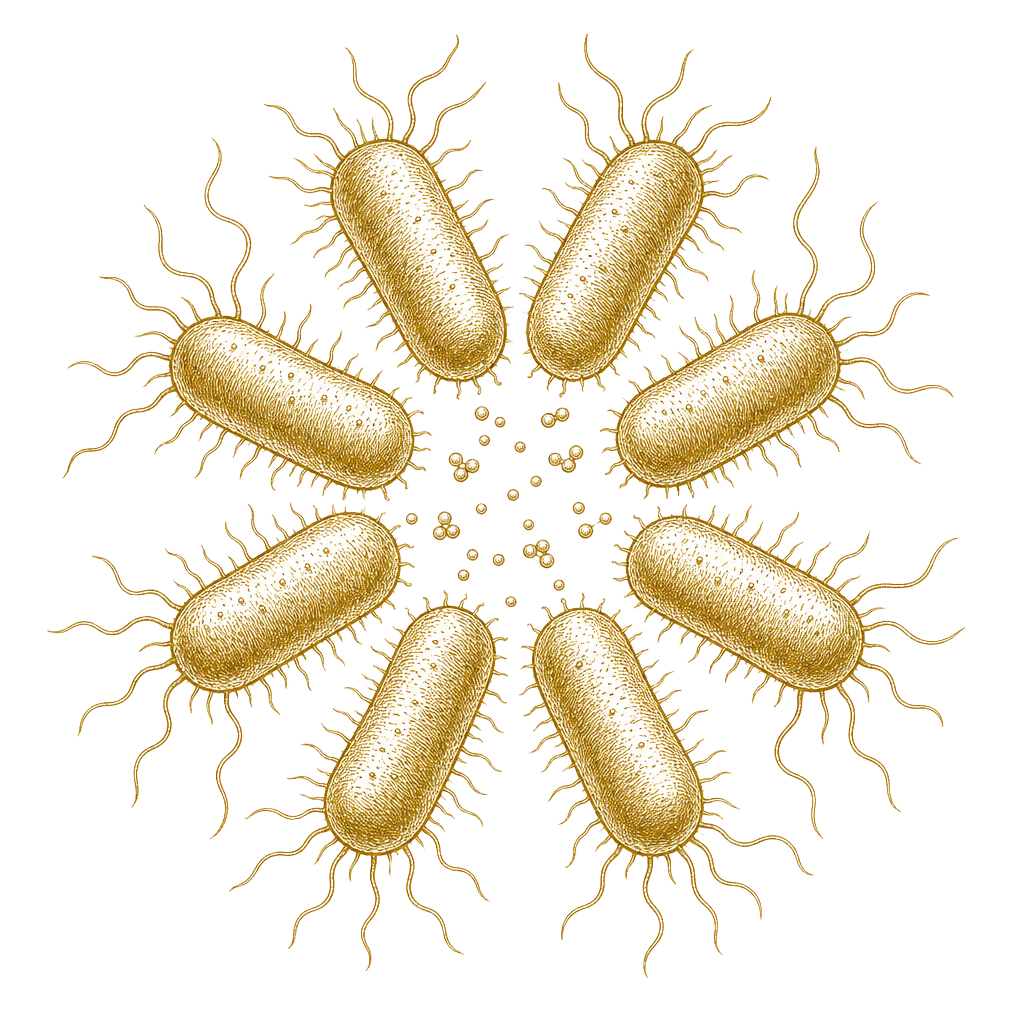
The idea, in one paragraph
A single bacterium does almost nothing interesting. Put enough of them together and they start counting each other, sharing costly work, punishing freeloaders, holding territory, and changing the behaviour of the animal they live in. The parallels to human social life are striking — and that is exactly why the claims need checking.
Every statement on this site carries a confidence rating and links to the published work behind it. Where the popular story runs ahead of the evidence, we say so rather than smoothing it over.
The Map
Six themes explained the way you'd explain them to a friend, each with the human parallel spelled out.
OpenEvidence Library
Every paper we've read, with a plain summary, the study type and a working DOI link.
OpenOpen Gaps
The questions nobody has answered, why each one matters, and what study would settle it.
OpenContribute
Add an observation, flag a paper we've missed, or nominate a gap. Reviewed before it appears.
OpenThe six themes
What we're actually mapping
How to read this site
Every claim wears its confidence
Nothing here is presented as settled unless it is. These four labels appear on themes, claims and papers throughout.
- Well established
- Repeatedly demonstrated, with agreement across independent groups.
- Emerging
- Real evidence exists, but it is early, limited, or not yet replicated widely.
- Contested
- Studies disagree, or the popular version of the claim runs ahead of the data.
- Not yet known
- Open question. Nobody has answered this properly yet.
Keep us afloat
Chip in, if you can
Small Talk is free, ad-free, has no paywall and sells nothing — not your data, not a supplement. Paper access, hosting and the hours spent reading and rating studies come out of one small studio's pocket. If this is useful to you and you have room, a contribution keeps it growing. Entirely optional, nothing is behind it, and donations are not tax-deductible.
Rather hire us than tip us? Brackish & Co builds public-knowledge tools like this one.