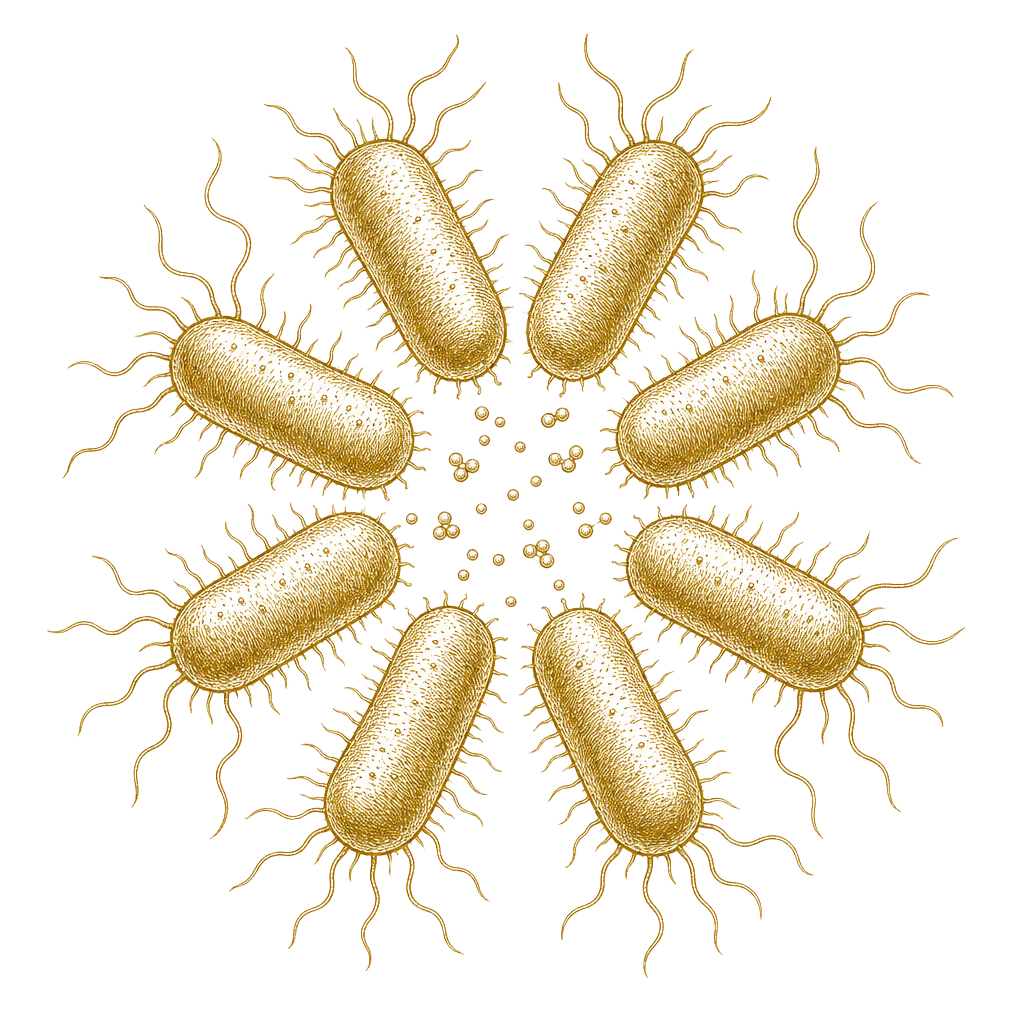
Cooperation and Cheating
Many bacteria make costly public goods — enzymes, iron scavengers, protective slime — that benefit everyone nearby. Some individuals stop paying the cost but keep taking the benefit. These are known as cheats, and populations have ways of limiting them.
The human parallel
It is the group project problem. Shared effort produces something nobody could make alone, and there is always a question of who is actually contributing.
Why it matters
Cooperation is not automatic or permanent. It is maintained by structure, proximity and relatedness — and it breaks down when those change.
What we can say
Each claim carries a confidence rating, a caveat, and the papers it rests on.